

ATOMIC STAMPS
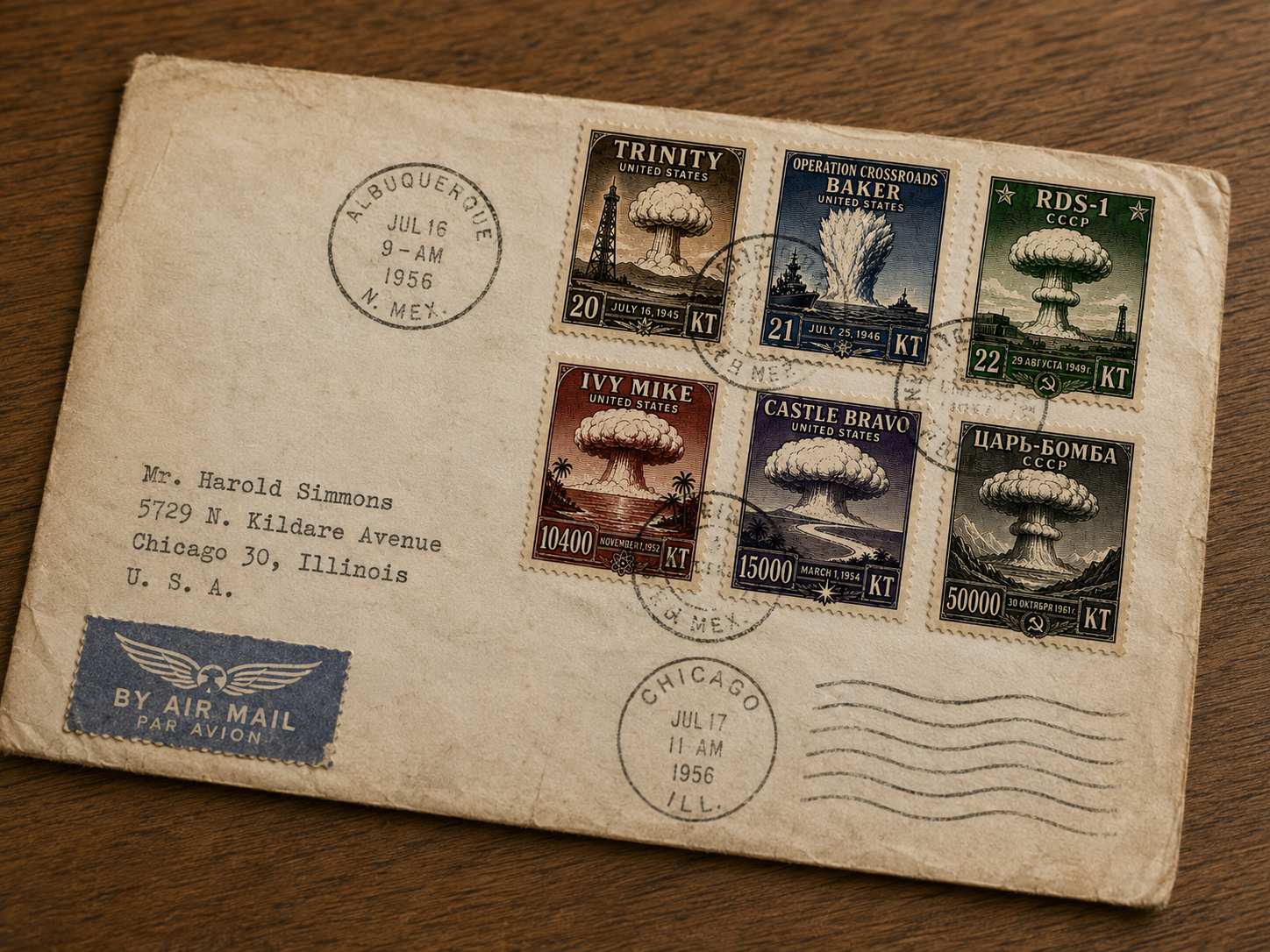
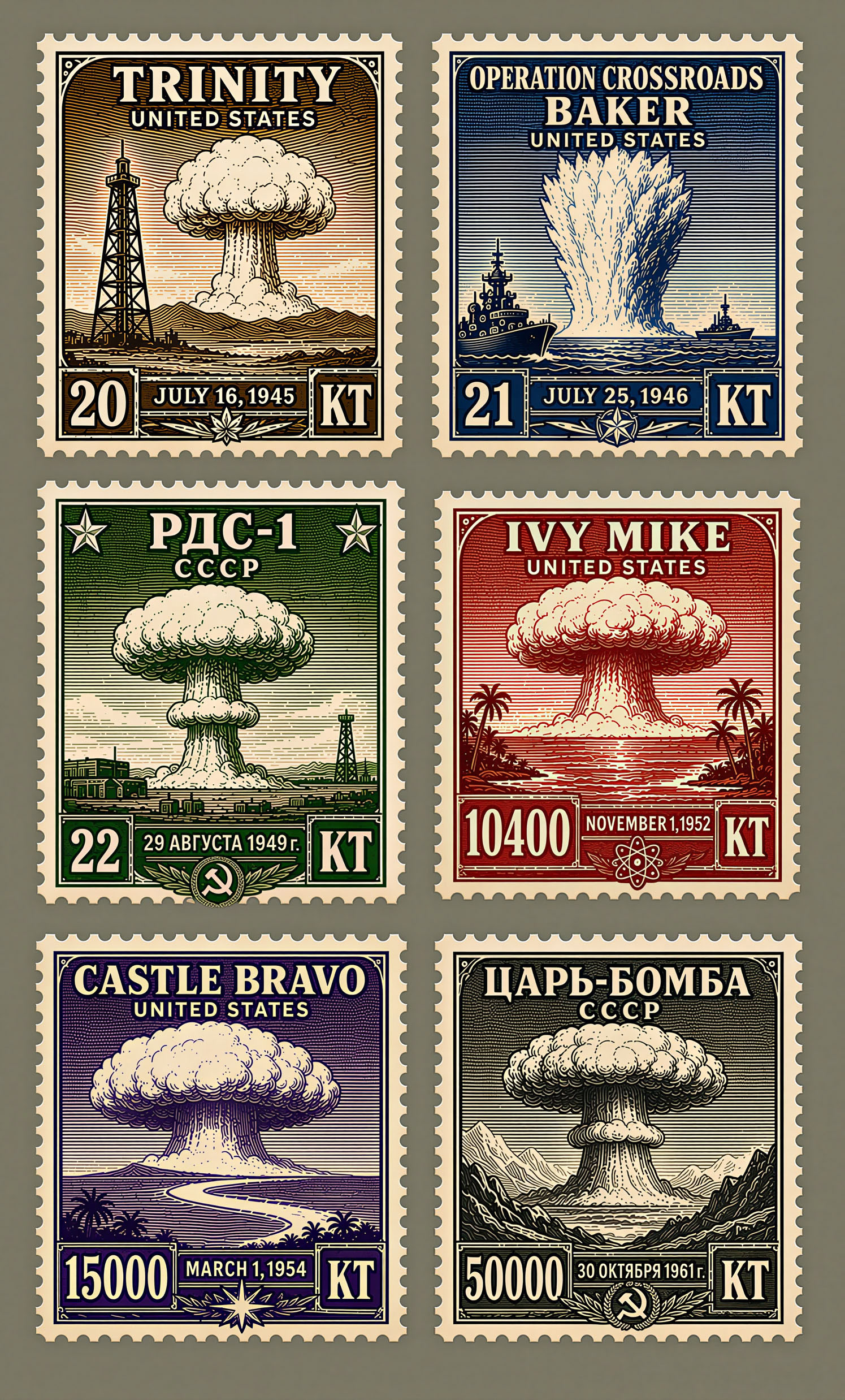
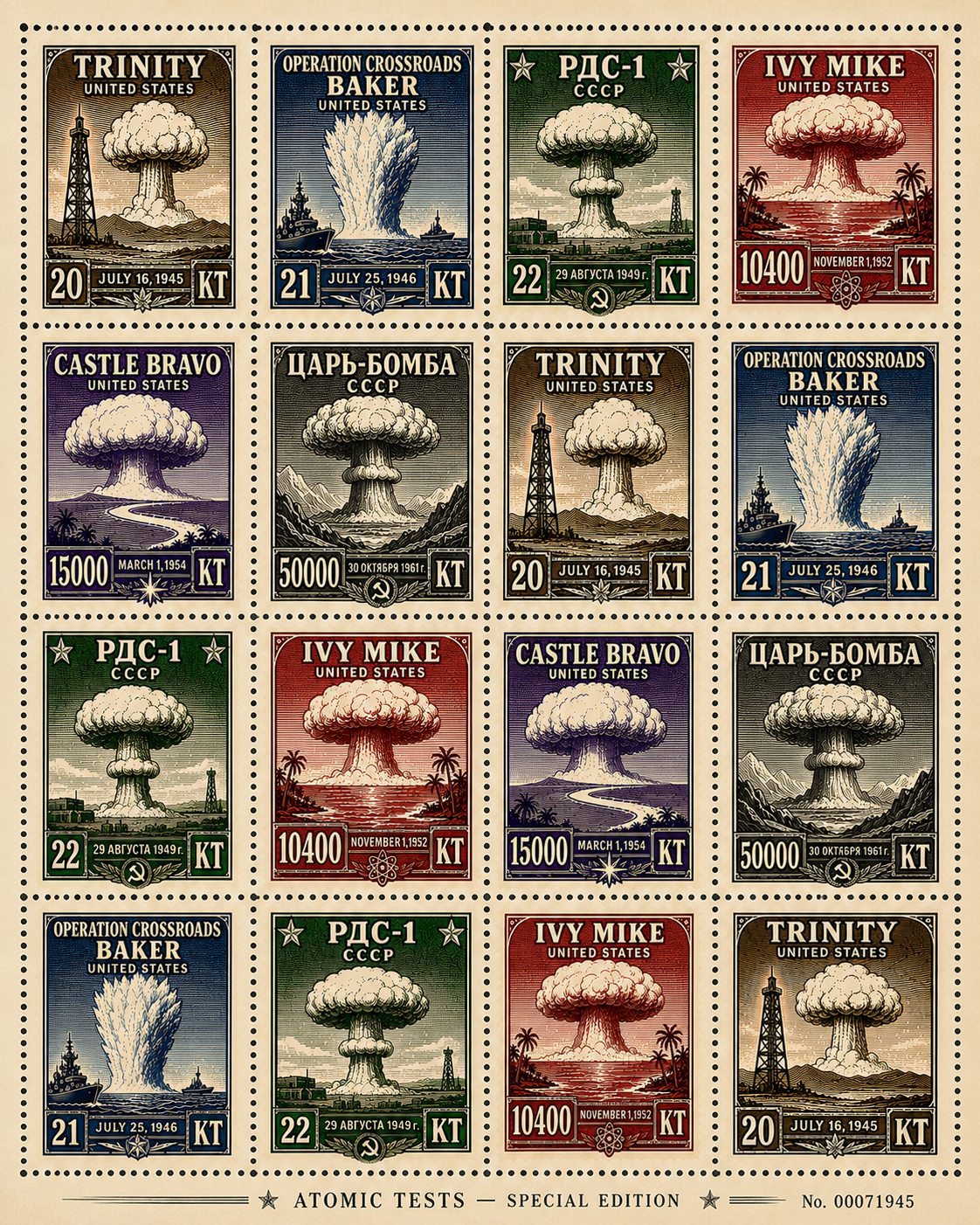
This series of six stamps visually explores and documents the most devastating nuclear tests of the 20th century. Through mid-century philatelic engraving aesthetics, the work juxtaposes the graphic beauty of official design with the destructive reality of nuclear warfare. Each piece records the exact date and yield in kilotons (KT), exposing the state propaganda of the two superpowers—the United States and the Soviet Union—in their race for atomic hegemony.
Description of the Stamps
Trinity (July 16, 1945) — 20 KT The dawn of the Atomic Age. Detonated in the Alamogordo desert (New Mexico), this was the first test using a plutonium device ("Gadget"). The stamp illustrates the iconic 30-meter-tall steel tower alongside the initial blast column.
Operation Crossroads: Baker (July 25, 1946) — 21 KT The first underwater nuclear detonation in history, conducted at Bikini Atoll. The design captures the moment a massive column of two million tons of water was blasted into the air, surrounded by the fleet of target naval ships arranged to evaluate the blast impact.
RDS-1 / РДС-1 (August 29, 1949) — 22 KT Known in the West as Joe-1, this detonation at the Semipalatinsk Test Site marked the Soviet Union's first nuclear test. It ended the American atomic monopoly and signaled the start of the Cold War arms race.
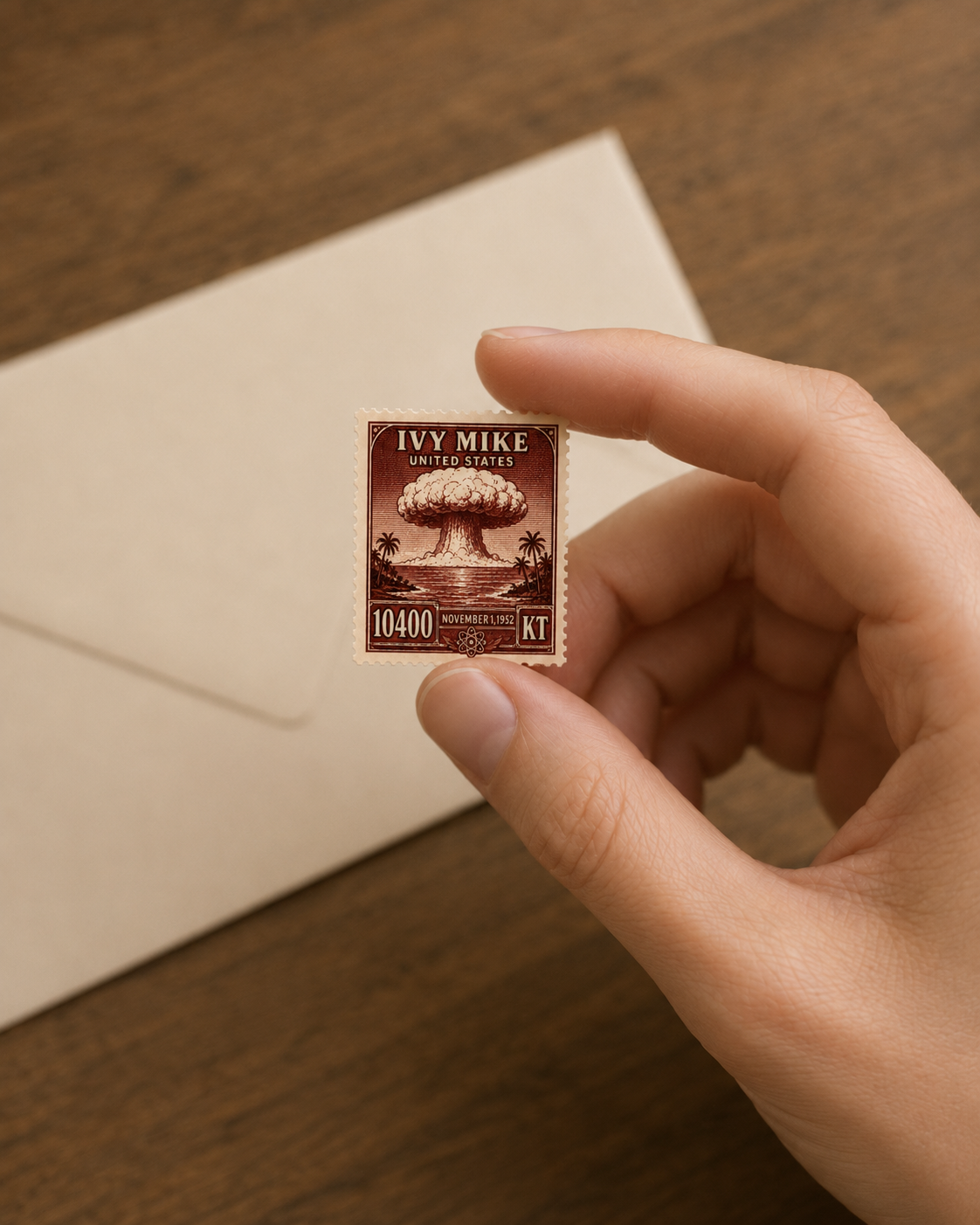
Ivy Mike (November 1, 1952) — 10,400 KT The leap to fusion physics. Tested at Enewetak Atoll, it was the first full-scale demonstration of a thermonuclear bomb (H-bomb). Yielding 10.4 megatons, its destructive force was more than 500 times greater than Trinity.
Castle Bravo (March 1, 1954) — 15,000 KT The largest nuclear detonation ever conducted by the United States. Executed at Bikini Atoll, it yielded more than double the original calculation due to an unforeseen reaction in lithium, becoming the ultimate symbol of Pacific thermonuclear testing.
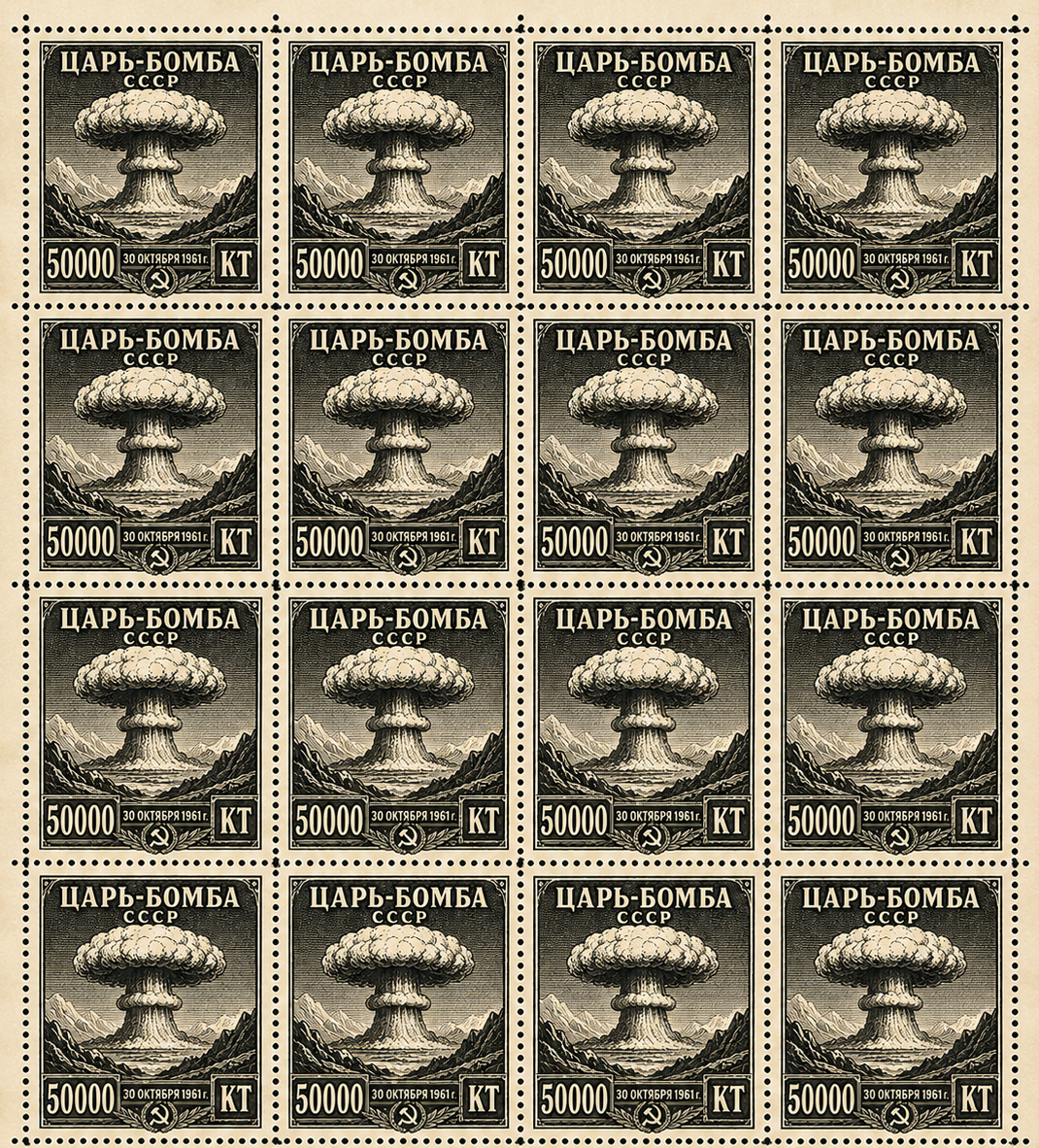
Tsar Bomba / Царь-бомба (October 30, 1961) — 50,000 KT The most powerful nuclear device ever built and detonated in human history. Dropped over the Novaya Zemlya Arctic archipelago by the Soviet Union, this 50-megaton superbomb generated a mushroom cloud exceeding 60 kilometers in height.
The "Atomic stamps" project was meticulously developed through a careful iterative process using artificial intelligence techniques.